More about the ERL Staff

For some time I have wanted to present information about each member of the Electrical Research staff. Over the years I have tried to collect information about each person–I have more for those people I’ve known well, but the NCR Archive has begun to yield information about the entire staff. Please check back from time to time as this section will be a work in progress. I am beginning with a list based on the payroll information I found, and will attach information I’ve collected to each name, as time permits. If family members find this page, and want to send me more details, please contact me. I welcome your help.

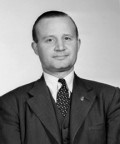
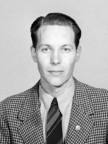
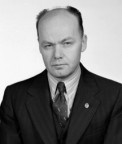
These photos come from 2 different sources. None of them are in the public domain. For information concerning possible use, contact Debbie Anderson

Photos yet to be found found for Ralph Bruce hired 18 Sept 1942, Frank X. Bucher hired June 2, 1941, Eugene Conover, Ralph Hept, Jack Kern hired 4 Jan 1938, L. M. Neumann, Anthony Nosil–if you are a friend or relative of any of these people, and would like to see them represented on this site, please feel free to contact Debbie Anderson

The wartime staff in the Electrical Research Department, in alphabetical order

bacher

C. A. Bacher

Bramlage

Bramlage

E. J. Carey

E. J. Carey

Edward DeLaet

Edward DeLaet

J. R. Desch

J. R. Desch

Robert Goebel

Robert Goebel

Don Henry

Don Henry

Roger Hull

Roger Hull

Isenhart

Isenhart

Kilheffer

Kilheffer

Robert Mumma

Robert Mumma

Harold Rice

Harold Rice

Louis Sandor

Louis Sandor

Comments are closed.

  • You Are Here

    More about the ERL Staff > Staff of the Electrical Research Lab > Personnel > Home
  • Sources

    This site has material from many sources. Some are use by permission. Before using, ASK. More specific information here.
  • Inside You’ll Find…

    WHO worked during the war? Find the Personnel section. Also, Joseph R. Desch
    WHAT were their goals? By the Numbers. Also, The US Bombe
    WHY? History of the Bombe Project A contemporary account of the reasons and the plans for their project for the Director of Naval Communications, 1944.
    WHERE was the project: In Dayton, it was in Building 26. In Washington, it was housed at the Naval Communications Annex
    • Recent Updates

    • Stray Thoughts in the Information Age

      Cryptology did not win the war. The war was won by the brave soldiers, sailors, airmen, and Marines who risked their lives in combat with the enemy. However, the ability to read the enemy’s most secret messages allowed American and British commanders to make wise decisions about the use of their troops; this shortened the time of war and saved countless thousands of Allied lives. The ironclad protection of U.S. high-level communications prevented the enemy’s intelligence personnel from exploiting these messages; this superior communications security effort also saved an untold number of lives and contributed greatly to the success of Allied operations.

      NSA, Center for Cryptologic History, from 50th Anniversary Brochure, p. 11. URL frequently change but currently this can be found at nsa.gov > History > Cryptologic History > Publications > NSA/CSS.

    This page last updated Last updated: July 10, 2013 at 10:37 am


    © Deborah Anderson. Use of materials by permission. Materials other than those clearly marked as National Archives materials are not in the public domain. More information here. Simple Privacy Policy is here

    HIT A DEAD END?

    I ask that visitors be patient when links or pages disappear or become mangled in the vagaries of PHP and generated code. Frequent additions and updates make for human error — please report any broken links or other problems to Debbie Anderson, site manager–your help is appreciated.

    E-mails are still appreciated, and I will try to respond promptly. Your messages are what make this job worthwhile.